

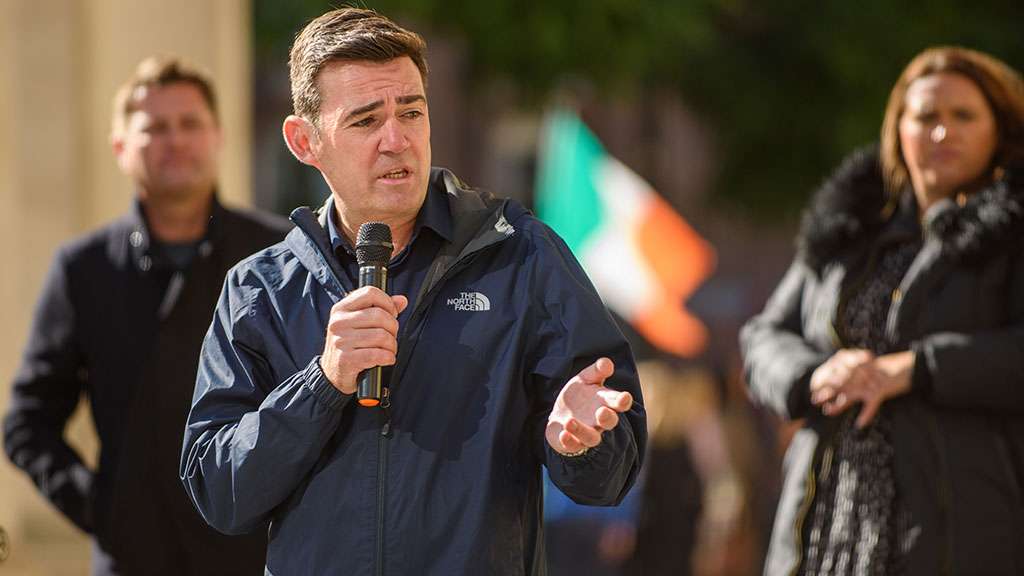
Leading economists, including an adviser to the man expected to be Britain’s next prime minister, have called for stamp duty and council tax to be swept away and replaced with a single annual property value tax, in what would amount to the biggest shake-up of property taxation in a generation.
The proposal sits at the heart of Prosperity 2030, a five-year fiscal programme from University College London’s Institute for Global Prosperity, launched this week and endorsed in an open letter to Andy Burnham signed by a group of high-profile economists. Among them is Lord O’Neill of Gatley, the former Goldman Sachs chief economist who now advises Burnham, alongside Professor Dame Henrietta Moore, founder and director of the institute, Professor Jonathan Portes of King’s College London, Professor John Muellbauer of Nuffield College, Oxford, and Danny Sriskandarajah, chief executive of the New Economics Foundation.
Burnham is set to become prime minister on July 20 if he wins the Labour leadership, inheriting an economy weighed down by high debt and sluggish growth. Westminster and the City are watching his fiscal plans, and his choice of chancellor, closely following his Manchester speech last week calling for greater devolution.
what the plan proposes
The Prosperity 2030 programme would replace stamp duty and council tax with a 1 per cent annual levy on property values. The report argues this would end “the absurdity of a modest terrace paying proportionally more than a high-value mansion”, with a deferral option ensuring “no one is forced to sell to pay it”.
The centrepiece of the wider package is a single national contributions levy replacing six taxes: income tax, employee and self-employed national insurance, dividend tax, inheritance tax and capital gains tax. The levy would range from 0 per cent to a 22 per cent base rate, with a 46 per cent top rate applied to a “flat definition” of income, raising £75 billion after five years. The proceeds would fund nine new universal services, delivered in kind rather than cash.
The thinking echoes long-standing analysis from the Institute for Fiscal Studies, which has repeatedly described council tax, still based on 1991 valuations in England, as out of date, regressive and distortionary, and stamp duty as a drag on transactions and labour mobility.
what it means for property investors
For landlords and investors, the abolition of stamp duty would remove one of the heaviest upfront costs of building a portfolio, particularly since the surcharge on additional properties rose to 5 per cent. Uncertainty around reform is already weighing on activity, with reports of a market slowdown driven by stamp duty reform fears as buyers hold off to see what emerges.
The flip side is a permanent annual charge on holdings. A 1 per cent levy on a £500,000 property means £5,000 a year to HMRC, a material recurring cost for owners of high-value stock. Speculation over property tax changes has already frozen parts of the prime market, and a value-based levy would shift the burden decisively towards expensive homes in London and the South East.
The politics are far from settled. Sir James Cleverly, the shadow housing secretary, has already branded the idea a “garden tax … straight out of the Corbyn playbook”, and investors will recall that the Conservatives’ own stamp duty abolition pledge excluded additional properties altogether.
Andrew Percy, co-chairman of the social prosperity network at the UCL institute and lead author of the report, said it was a “plan to cut taxes for working people, abolish the taxes holding back the housing market, and get young people into paid work. The question is no longer whether Britain can afford reform. It is whether we can afford another decade without it.”
The letter’s signatories put it starkly: “Seven prime ministers in ten years have inherited the same challenge and failed to solve it for the same reasons: the problems are structural and systemic.”


