UK commercial property investment held broadly steady in the second quarter of 2026, with £10.7bn traded despite a difficult geopolitical and macroeconomic backdrop, according to Carter Jonas’s latest investment quarterly.
That total is essentially unchanged on the first quarter and in line with recent quarterly norms, which in the current market counts as a result rather than a disappointment.
The rolling annual figure has now reached roughly £48.8bn, its highest level since the first quarter of 2023 and broadly back in line with the five-year average, according to Carter Jonas.
A market carried by a handful of very large deals
Look beneath the headline number, though, and the picture thins out quickly. Just 351 deals completed over the quarter, marginally fewer than in Q1 and well below the level recorded a year earlier.
Flat volumes on a falling deal count tell their own story. Stability is being bought by a small number of outsized transactions rather than by any broad return of liquidity.
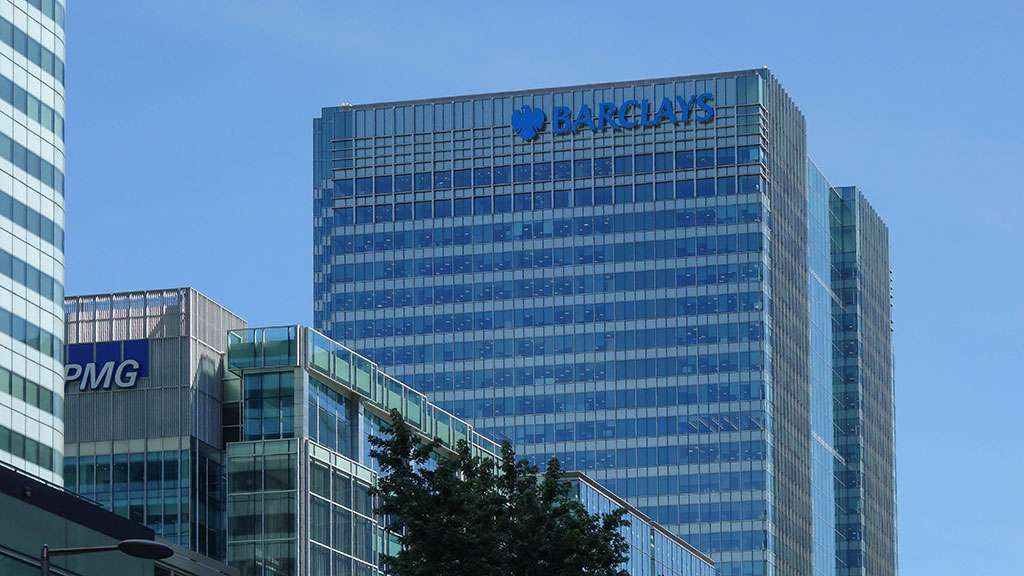
The clearest illustration arrived at the end of June, when Barclays paid £750m to Canary Wharf Group for a 999-year leasehold interest in One Churchill Place, its global headquarters since 2005 and more than 1m sq ft of Canary Wharf office space. It was Europe’s largest office deal in almost four years.
Strip out one or two trophies on that scale and the quarter reads considerably weaker. Investors treating £10.7bn as proof of a general recovery should hold that thought.
Alternatives are no longer the diversification trade
Alternative assets accounted for 55 per cent of UK investment activity in Q2, according to Carter Jonas, ahead of offices on 23 per cent, industrial on 13 per cent and retail on 9 per cent.
Measured against long-run norms the divergence is sharper still. Alternatives traded 43 per cent above their five-year quarterly average, while industrial sat 54 per cent below, retail 47 per cent below and offices 25 per cent below.
Living, student accommodation, healthcare and operational assets are no longer a hedge against the traditional sectors. On these numbers they are the market, and institutional capital has been moving that way for some time, as Landsec’s £2bn office sell-off in favour of residential demonstrated.
For portfolio investors, the read-across is uncomfortable. Industrial, long the consensus overweight, is now the furthest below its own five-year run rate, even as yields on logistics and retail warehousing continue to look competitive on paper. Weak transaction volumes and attractive quoted yields are not the same thing.
Pricing has settled, rents have not
All-property equivalent yields have been broadly stable at around 7.0 per cent for the past two years on the MSCI Monthly Index, following the sustained upward movement from mid-2022 to early 2024, according to Carter Jonas.
Rental values are the weaker half of the equation. They remained under pressure across the first half of 2026, although the pace of decline eased during Q2, with annual rental value growth improving from minus 3.9 per cent in April to minus 2.9 per cent in June.
Easing decline is not growth. But it does narrow the gap between what buyers will underwrite and what vendors will accept, which is usually where transaction volumes start to build.
The macro backdrop is doing less damage than it was. The Bank of England has held Bank Rate at 3.75 per cent, and the RICS UK Commercial Property Monitor reported improving tenant demand in Q2, albeit heavily concentrated in London. Occupier fundamentals are firmer in the office sector than the sector’s investment share suggests, with prime London rents pushing to record highs as construction slows.
What this means for investors
The Q2 numbers reward stock pickers, not sector allocators. With only 351 deals across the whole market, pricing is being set asset by asset rather than by any broad sentiment shift, and that is precisely the environment in which mispriced individual buildings surface.
Three things are worth watching into the second half. Whether the rental decline turns positive, whether deal counts recover as well as deal values, and whether alternatives can hold a 55 per cent share once traditional sector pricing finally clears.
Investors buying the market average in 2026 will get the market average. Those willing to underwrite specific assets, particularly in the discounted industrial and retail sectors, may find the thin market works in their favour.