The government has confirmed it: every private rental in England and Wales must reach EPC C, or register an exemption, by 1 October 2030, with a £10,000 cost cap per property. This EPC C landlord guide decodes the new rules, ranks the works per pound spent, and shows how to make the numbers work for you, not against you.
Four heating seasons to Band C
On 21 January 2026, alongside the £15 billion Warm Homes Plan, the government published its response to the 2025 consultation on energy standards in the private rented sector, a decision PPI covered when landlords were given a two-year extension to 2030. The headlines: all privately rented homes in England and Wales must meet the equivalent of EPC C by 1 October 2030, on a single compliance date for new and existing tenancies, replacing the previously floated 2028 phase-in; the cost cap rises from £3,500 to £10,000 of relevant spend per property, with qualifying expenditure counted from 1 October 2025; and where a property cannot reach the standard within the cap, the landlord can register an exemption expected to last ten years.
Until then the current floor of EPC E continues to apply. The requirement remains subject to final legislation, but the policy is settled, funded and cross-referenced by the PRS database, which will hold EPC details for every registered property.
Why act on EPC C years early
Three reasons, all practical. First, capacity: several million rental properties sit below C, and the assessors, installers and materials to fix them do not scale instantly; the closer to 2030 the work is left, the more it will cost and the longer it will take. Second, tenancies: under the Renters’ Rights Act you can no longer time works to the end of a fixed term, because there are no fixed terms, so improvements are best done in voids you cannot schedule, which argues for starting when the first void appears rather than when the deadline forces one.
Third, the transition rules reward early movers: a property assessed at C on the current metrics before 1 October 2029 counts as compliant until that certificate expires, buying up to a decade of certainty ahead of the new, tougher assessment regime described next.
The certificate is changing too
Today’s EPC scores a property on the Energy Efficiency Rating, essentially modelled running cost, using the long-standing SAP methodology; band C means 69 points or better. That regime is being replaced. New-style certificates begin appearing from late 2026, and from 2029 assessments move onto the Home Energy Model, a modern calculation engine, with the private rented standard judged on a dual-metric basis in which fabric performance carries the leading role alongside heating-system and smart-readiness measures, changes whose cost implications PPI examined when EPC C became law under the Warm Homes Plan. The precise band boundaries under the new metrics were still being finalised at the time of writing, so the prudent read is directional: the coming regime rewards insulation and airtightness first, efficient heating second, and will not let a cosmetic fix substitute for fabric.
For a landlord planning works, the transition creates a genuine strategic choice. Route one: improve now, get assessed on the familiar current metrics before 1 October 2029, and bank compliance until that certificate expires, typically ten years, carrying you well past the deadline. Route two: wait for the new metrics, accepting later, possibly costlier works and the 2029-30 rush, in exchange for certainty about what is being measured. For most portfolios route one dominates, because the works that score under the current system will not be wasted under any plausible successor, and because the queue risk is real. The exception is the genuinely hard case, the solid-wall, off-gas cottage, where it may pay to await the final rules and the exemption framework before committing serious money. Know which of your properties is which before you spend a pound.
The route to EPC C, per pound
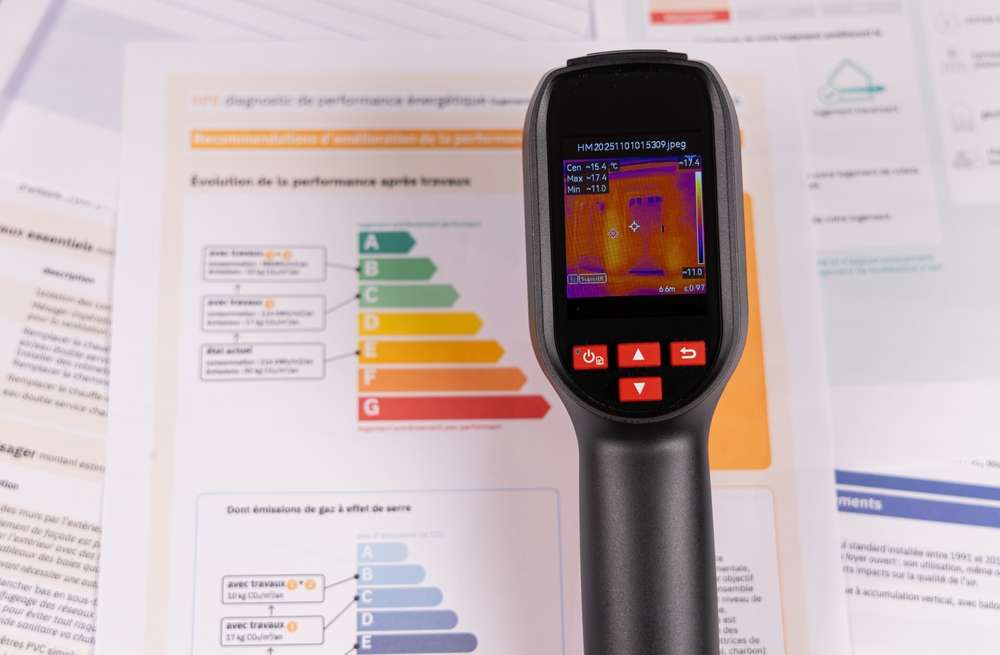
Start every property the same way: a current EPC with its recommendations list, cross-checked by your own eyes, because certificates lodged a decade ago routinely miss insulation that exists or credit boilers that have since been replaced; sometimes a fresh assessment alone lifts a band. Then work down the cost curve. Loft insulation topped up to modern depth is the cheapest points on the board, typically £300 to £700. Cavity wall insulation, where the construction allows, at £500 to £2,500, is the next cheapest and often the single biggest jump for mid-century stock. Heating controls, thermostatic valves and a room thermostat at £200 to £600, low-energy lighting and draught-proofing are small individually but cumulatively meaningful. A condensing boiler replacing an old unit, £2,000 to £3,500, moves several points; better glazing helps at the margin and helps lettability more.
These measures, sensibly sequenced, take the great majority of D-rated properties to C for £1,000 to £4,000, hedged as all such figures must be for property size, access and local labour rates, and re-scored under the new metrics from 2029. A pre-1919 solid-wall terrace at band E is a different project from a 1970s cavity-wall semi at band D: the semi usually reaches C inside £3,000, while the terrace may test the full £10,000 cap. Price the difference into what you pay when you buy, because the market increasingly does.
The hard cases and the cap
The hard cases are hard for identifiable reasons: solid walls, which need internal or external insulation running from £8,000 upwards; no mains gas, which historically forced expensive electric heating, though heat pumps now score far better under the incoming metrics than the old ones; and single-glazed heritage windows in conservation areas. Here the £10,000 cap is doing its intended work: spend it on the recommended measures, and if C remains out of reach, register the exemption and relet legally.
The investor’s discipline is to run this analysis before purchase, not after: an E-rated solid-wall house must be cheaper than its C-rated neighbour by at least the realistic works cost, and if it is not, the seller is asking you to fund their compliance.
Caps, exemptions and other people’s money
The compliance architecture is worth knowing precisely, and the government’s consultation response sets it out in full. The obligation attaches wherever an EPC is legally required, which is almost every letting; short-term lets are outside the 2030 requirement for now. Spend on relevant improvements counts towards the £10,000 cap from 1 October 2025, so invoices from now on should be retained and itemised, because they are the evidence for a future exemption if the property falls short. Exemptions will sit on the PRS exemptions register, expected to last ten years, and the enforcement regime is being strengthened alongside, with penalties proposed up to £30,000 per property. The heritage carve-outs that once excused listed buildings have been narrowed: assume works are required unless specifically advised otherwise, and get that advice in writing.
On the funding side, the Warm Homes Plan attaches real money. The Warm Homes Local Grant funds improvements for lower-income and lower-EPC private tenancies through participating councils, with landlord contributions on a sliding basis; the Boiler Upgrade Scheme discounts heat pump installations; and the government has confirmed low-interest landlord loans will accompany the 2030 standard. Eligibility is household- and area-specific, so check each property’s council scheme at each void. Tax treatment matters too: like-for-like replacements and many efficiency works are deductible repairs against rental income, while improvements are capital, a distinction with real cash value that belongs in your accountant’s in-tray, not guessed at. Keep every certificate, every invoice and every grant letter in the property file; in this regime, the file is the asset.
Retrofitting around real tenants
Treat the portfolio as a programme, not a series of emergencies. Rank every property by current band, construction type and certificate expiry: the D-rated cavity-wall houses are the quick wins to clear first, the solid-wall Es are the projects to plan and budget across years, and anything already at C needs only a diary note for reassessment before its certificate lapses. Most fabric measures, loft top-ups, controls, even cavity fill, can be done with a cooperative tenant in situ in a day or two, and tenants facing lower bills usually are cooperative if works are explained and scheduled around them; the disruptive jobs, wall insulation and heating replacement, wait for voids, which under periodic tenancies arrive on the tenant’s two months’ notice rather than your calendar. The practical answer is pre-procurement: surveys done, quotes standing and contractors briefed, so that when notice lands the works start the week the keys come back and the property returns to market at C.
Do not manage the programme purely as a cost. A C-rated property lets faster and, increasingly, at a premium, because bills are part of the tenant’s affordability arithmetic; lenders are pricing energy performance into green mortgage products and, more quietly, into valuations; and when the exodus of non-compliant landlords accelerates towards 2029, compliant stock will command the market on both rent and resale. The £10,000 cap also reframes the worst case: your maximum obligatory exposure per property is known, which is more than can be said for most regulatory risks in this sector.
The investor’s playbook
Energy compliance is the rare regulation with a fixed date, a capped cost and public money attached, which makes it unusually plannable. The sequence is not complicated: know every property’s true current position, do the cheap works early and in occupation where possible, bank compliance on the current metrics before October 2029, reserve the cap for the genuinely hard stock, and paper everything.
The guide’s checklist runs the programme:
- Before you buy: read the current EPC and its recommendations; price the route to C into your offer; check solid-wall and off-gas risk; confirm no conservation-area complications; ask the council about grant schemes.
- While you hold: commission works at voids, cheapest measures first; keep itemised invoices towards the £10,000 cap; re-assess before October 2029 to bank the current metrics; register any exemption promptly; diary certificate expiries.
The same knowledge turns you from forced seller to informed buyer as under-prepared landlords exit with their E-rated terraces between now and the deadline; the discount you negotiate for their deferred works is the cleanest profit in this guide.
The bigger picture
Step back and the 2030 standard is one strand of a broader convergence. The PRS database will make every rental’s EPC publicly linked to its landlord; the Decent Homes Standard will bring wider condition rules; Awaab’s law principles put damp and mould, the classic symptoms of poor fabric, into the enforcement arena; and the mortgage market is steadily differentiating on efficiency. The direction of energy policy, electrified heat, the Home Energy Model, the Future Homes Standard for new build, all points the same way: the gap between efficient and inefficient stock will widen in rent, in value and in liquidity. Analysts already observe E-rated stock trading at discounts in investor auctions, and the policy squeeze is not confined to homes, as PPI has reported on the parallel uncertainty facing commercial landlords.
For the portfolio investor the strategic readings are two. Defensively, an unimproved portfolio is carrying a dated liability the market can increasingly see and price, so the programme in this guide is really balance-sheet maintenance. Offensively, the years to 2030 will deliver a steady stream of motivated sellers whose properties need exactly the works you now know how to cost, and the investor who can buy at the discount, execute the retrofit and relet at C is running the simplest value-add strategy available in residential property. The final word is the usual one: legislation was still being finalised at the time of writing, band boundaries under the new metrics remain to be confirmed, and grant schemes open and close; verify the current position before committing capital, and keep your accountant and your assessor closer than your architect.