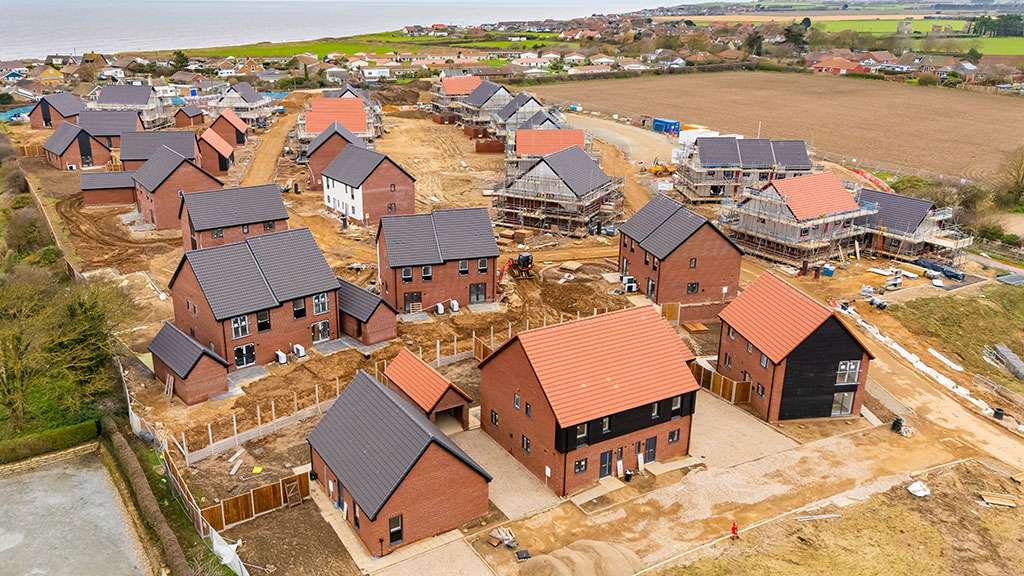
Bellway has told ministers to reverse last year’s tax rise on new buyers and resurrect deposit support, arguing a stamp duty cut for first-time buyers is the quickest way to restart a stalled new-build market
The intervention from one of Britain’s biggest housebuilders lands as demand for new homes weakens under higher mortgage rates, the war in Iran and political turbulence at home. Bellway says the government must “act now to improve access to housing across all tenures”.
For investors, the subtext is just as interesting as the headline demand. Bellway’s full-year numbers show a builder propping up volumes with discounted bulk sales to institutional landlords, a trade that is quietly reshaping who buys new-build stock.
A £1.2 billion order book, a fifth smaller
Jason Honeyman, Bellway’s 58-year-old chief executive, wants the stamp duty increase imposed on first-time buyers in April 2025 reversed immediately, plus a government-backed deposit scheme to “ease affordability constraints and stimulate demand”.
“We’re realists, we understand that the government can’t do much about mortgage rates, but they can certainly help young people,” he said. “We need a stamp duty cut [for first-time buyers] to reverse the extra taxes put on by this government in April 2025 and we need a deposit support scheme to help young people.”
The market has “paused” since the war in Iran pushed mortgage rates higher, Honeyman said, and Bellway’s order book tells the story. At £1.2 billion, it is a fifth smaller than at the same point last year, in a housing market already slowed by stamp duty reform speculation.
The government was unmoved. A spokesman said on Tuesday there are “no plans” to bring back Help to Buy.
Volume driven hard, margin paying the price
Bellway completed 9,695 homes in the year to the end of July, 11 per cent more than the previous financial year and a couple of hundred ahead of City forecasts. The growth partly reflects more bulk sales to institutional landlords, typically struck at slightly lower prices.
That left the builder with £158 million at year end, against £42 million at the same point in 2025, but squeezed the annual profit margin to 10 per cent, almost a full percentage point lower year on year.
Underlying profit is expected to come in at £320 million, up from £303.5 million a year earlier but roughly £4 million shy of analyst forecasts. “It’s a credible performance, but you can see we’ve driven volume hard to generate cash but at the expense of margin,” Honeyman said. Shares closed up 1.8 per cent at £21.38 on Tuesday, still 22 per cent below where they started the year.
The tax arithmetic behind the ask
In April 2025 the government cut the stamp duty nil-rate threshold for first-time buyers from £425,000 to £300,000. Bellway believes restoring the old threshold would “get the market moving” straight away.
The Treasury has little fiscal incentive to agree. Based on HM Revenue & Customs demand models used by the Office for Budget Responsibility, the April 2025 changes were expected to cut transactions by about 3 per cent over 12 months yet still raise revenue. In reality, sales came in about 85,000 higher than anticipated and revenues about £2 billion larger, according to the modelling exercise, possibly helped by falling mortgage rates in 2025.
The longer-term drag remains, however. Around 30,000 purchases a year, many by first-time buyers, are estimated to be lost to the higher rates, while revenues run about 10 per cent higher.
Help to Buy, which ran from 2013 to 2023, offered equity loans that shrank the mortgage first-time buyers needed. Critics say it inflated builders’ profits, pointing to the £82 million in bonuses collected by former Persimmon boss Jeff Fairburn in 2017 and 2018. Honeyman argues a revived scheme “doesn’t need to be controversial” if developers pay access fees and it is restricted to first-time buyers with a price cap.
What this means for investors
Two signals stand out. First, housebuilders are increasingly willing to sell in bulk at a discount to institutional landlords, which may create openings for larger portfolio investors even as off-plan new-build sales sit at a 12-year low among individual buyers.
Second, with the government showing no appetite for demand-side stimulus and tax and duty hikes already suppressing residential investment sales, the pressure on first-time buyer demand looks set to persist. That points to continued rental demand, softer new-build pricing and negotiating power for investors able to buy at scale.