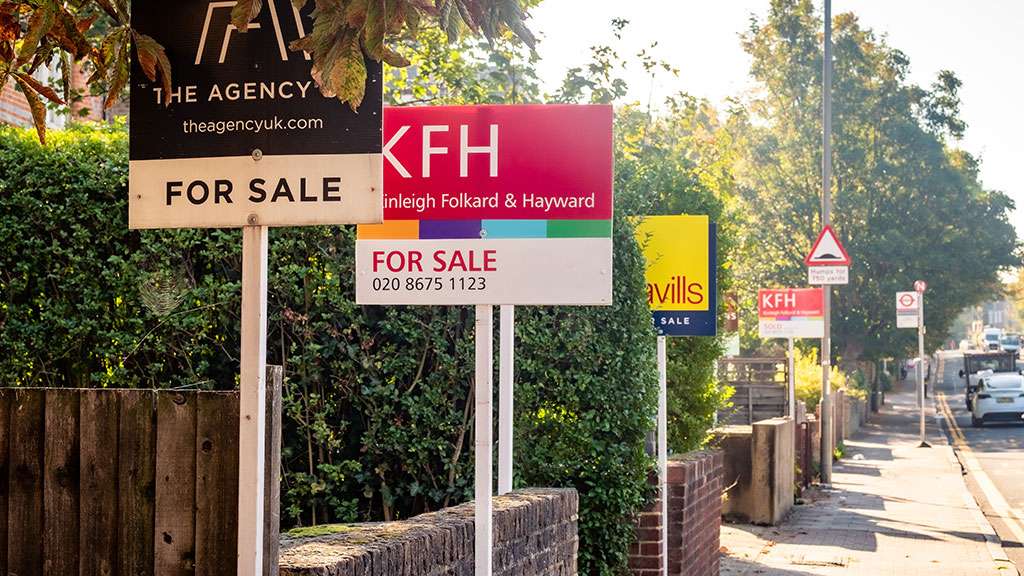
For more than a decade, Britain’s buy-to-let success stories were written in capital appreciation. Buy almost anywhere, hold for long enough, and the market did the heavy lifting. That era, the latest data makes plain, is over, at least for now.
The picture emerging from Rightmove and the Office for National Statistics is not one of collapse, but of a market quietly losing its growth engine. Asking prices crept up just 0.8 per cent in April to £373,971, yet remain 0.9 per cent lower than a year ago. Inflation, meanwhile, has begun creeping back, with CPI climbing to 3.3 per cent in March from 3 per cent the month before. Taken together, the numbers describe a property market that is neither rising nor falling so much as recalibrating, and one where the rules of the game have unmistakably changed.
For seasoned investors, that recalibration is no bad thing. The challenge, however, is that returns can no longer be conjured from rising tides. They must be built, deal by deal, on the unglamorous fundamentals of entry price, rental income and long-term durability.
affordability, not appetite, is now the dominant force
What has shifted, more than anything, is the buyer’s calculus. The average two-year fixed mortgage rate now sits at around 5.42 per cent, against roughly 4.25 per cent only a few years ago. Even as some lenders trim fixed rates in response to easing swap pricing, the broader cost of borrowing remains a stubborn brake on activity.
The market data tells the same story in different language. Transaction volumes are surprisingly resilient, down only around 3 per cent year-on-year, but underlying buyer demand has slipped roughly 7 per cent, a tell-tale sign that the pool of credible purchasers has narrowed even where deals are still being done. Where buyers do appear, they arrive better informed, more price-sensitive and far less inclined to chase.
That is precisely the kind of environment in which disciplined investors can prosper. With less competition for stock and more pressure on vendors to be realistic, opportunity exists – but only for those willing to underwrite each acquisition on the numbers in front of them, rather than the numbers they hope will arrive.
For the first time in over a decade, supply is back on the buyer’s side. Rightmove reports homes for sale are at an eleven-year high for this point in the year, up 13 per cent on 2024. In theory, abundance should be a gift to investors. In practice, the picture is more nuanced.
More properties on the market does not equate to more profitable deals. It simply means more to sift through, and more vendors who will need to come down to meet credible bids. The implication for investors is clear: filtering discipline matters more than ever. Rushing to deploy capital because choice has expanded would be a mistake; equally, dismissing the moment as quiet would be to overlook a genuine recalibration of pricing power.
If house price growth has stalled, the rental sector is showing why income-led returns now warrant top billing in any investment thesis. Private rents across the United Kingdom climbed 3.4 per cent in the year to March, with the average monthly rent reaching £1,377. That is comfortably above the rate of capital growth – and a reminder that, in a constrained supply environment, tenant demand remains intense.
The regional gap, however, demands attention. Rental inflation is running at 6.5 per cent in the North East, where yields have long looked attractive on paper, but at a more modest 1.7 per cent in London, where affordability ceilings are clearly being tested. That divergence is no statistical curiosity. It is a roadmap. Investors prepared to move beyond the gravitational pull of the South East are increasingly the ones generating the strongest cash-on-cash returns.
The temptation, in a flat market, is to wait. To assume that lower interest rates, a friendlier inflation print or a Budget giveaway will reignite the sort of capital growth that papered over so many imperfect deals in the past. That temptation should be resisted.
Higher inflation, even if cooling, continues to shape rate expectations. Mortgage pricing remains fluid rather than falling. And while transaction volumes hint at resilience, they are not a sign of recovery so much as of stabilisation. The lesson is straightforward, if uncomfortable: investors can no longer rely on timing the market or piggy-backing on broad-based growth.
What works now is the harder, less heroic discipline of deal quality. Does the property generate income from day one? Is the location underpinned by structural demand drivers, employment, transport, regeneration, rather than sentiment? Are the assumptions on rent, voids and finance costs realistic in the world as it is, not as we might wish it to be?
Britain’s housing market in 2026 is best described as stable, but selective. Stock is plentiful, prices are holding, demand exists, but the easy money has gone. For investors who already understand that returns are made at the point of purchase, that is not a market to fear. It is, quietly, one of the more rational entry points in years.