Britain’s rearmament is about to become a property story. The government’s newly unveiled £298bn Defence Investment Plan, which added a further £15bn this week, is not just a matter of submarines, missiles and drones.
It is a demand-side shock for the one corner of UK real estate that investors already covet most: large-scale, high-specification industrial space.
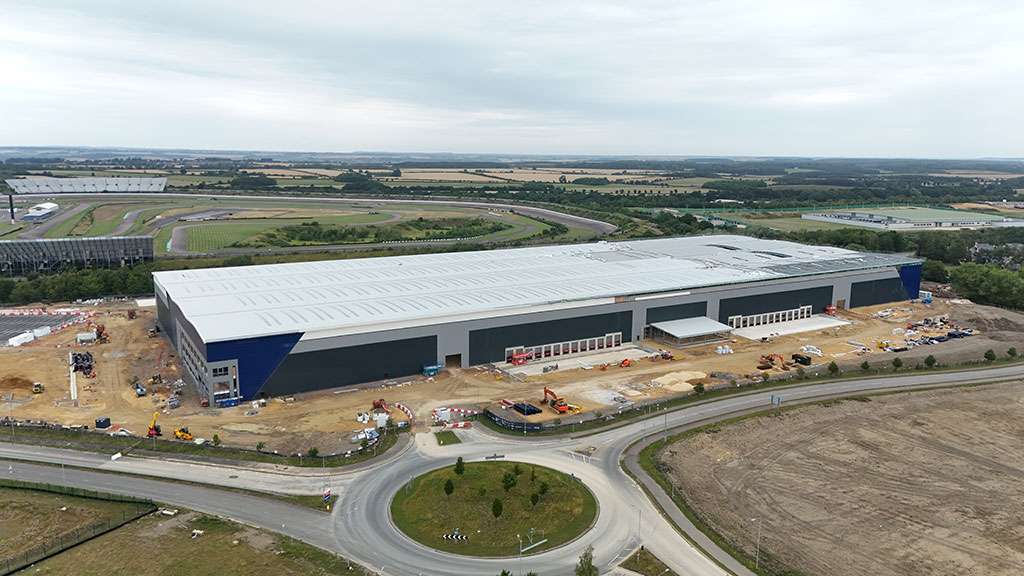
The clearest sign of what is coming is already standing in Wiltshire. This month the Ministry of Defence opened its “world-leading” uncrewed systems testing facility at Panattoni Park in Swindon, a site four times the size of NATO’s tactical drone centre in Latvia and now the largest indoor facility of its kind in Europe. The MoD has taken a 15-year lease on a 525,000 sq ft unit on the former Honda plant, and it is not arriving alone. Eight drone-linked companies, among them Stark, Tekever and Icomat, have now committed to the town, turning a single occupier deal into the anchor of a defence cluster.
Why defence is an industrial story
Defence manufacturing, research and logistics do not fit into ordinary sheds. They need power-intensive, secure and automation-ready buildings capable of handling complex equipment and sensitive materials, the kind of specification that commands premium rents and rewards landlords willing to build to suit. Swindon’s Panattoni Park is fast becoming the reference case for how obsolete industrial land, in this instance a shuttered car plant, can be repurposed for an entirely new wave of occupier demand.
That is the pattern investors should watch. The repurposing of the Honda site echoes the broader re-rating of UK sheds, a theme running through everything from the record £1bn Tritax Big Box warehouse deal with Blackstone to the wider surge in overseas capital chasing UK commercial property. Defence adds a new, government-backed layer of covenant strength to a sector that was already the market’s favourite.
The numbers behind the demand
The scale is significant. Savills estimates the government’s plan could generate up to 32m sq ft of additional UK industrial and logistics demand over seven years, a figure comparable to the annual warehouse requirement created by the entire high-street retail sector. On top of that, the agent expects a further 2.6m sq ft of office and research and development space by 2033 to support roughly 12,600 new defence manufacturing roles.
Those numbers matter because they land on a market with little slack. As Savills has noted in its analysis of rising defence spending, the existing defence logistics footprint is already substantial, and the new plan piles fresh demand onto stock that is in short supply in the very locations, near skilled labour, power and transport links, that occupiers need.
What it means for investors
For property investors, the read-across is straightforward. Long income, strong covenants and specialist buildings are exactly the ingredients that have driven industrial yields tighter over the past decade, and defence money brings all three. Locations with redundant large-format sites, defence heritage or proximity to existing clusters look best placed to benefit, and Swindon has just shown how quickly a town can reposition itself around a single anchor tenant.
The caveat is that this is not generic warehousing. The specification bar is high, planning for secure and power-hungry facilities is complex, and the demand is concentrated rather than nationwide. But for investors weighing where the next leg of industrial outperformance comes from, as we explored in our guide to the top commercial property sectors and regions for 2025, the answer increasingly has a Union flag on it. Britain’s defence build-out has quietly become one of the most compelling structural demand stories in UK real estate.