Britain cannot get enough small warehousing, and the buy-to-let playbook does not apply: no tenancy reform, no stamp duty surcharge, no EPC C deadline, and a tenant who repairs the roof. This industrial unit investment guide walks the residential landlord into their first commercial purchase, and shows how to make the numbers work for you, not against you.
The shed the economy runs on
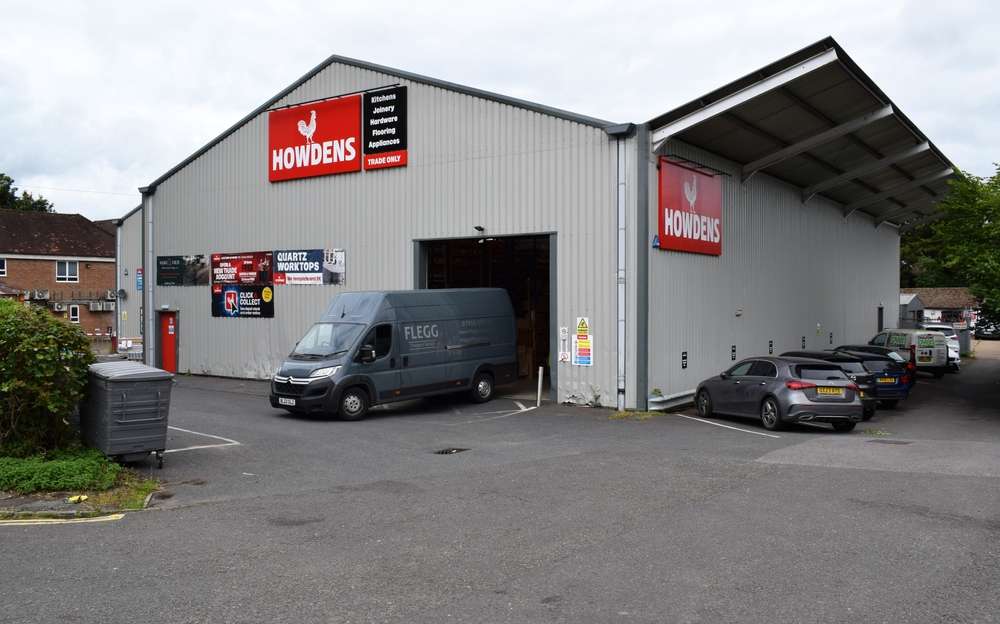
The small shed, in this guide, means the workaday end of industrial property: units of roughly 1,000 to 5,000 square feet on trading estates and in urban infill, let to couriers, kitchen fitters, gyms, vehicle repairers, online retailers and the thousand small businesses that need a roller door, three-phase power and somewhere to park a van. Demand for such space has been structurally transformed by online retail, whose share of spending reset permanently upwards after the pandemic, and supply has not kept pace: land values push developers towards housing and big-box logistics, and industry analysis expects just 8 million square feet of speculative industrial starts in 2026, the lowest since 2017.
The result shows up in the letting data, with prime rents for mid-box and multi-let units around £15.55 per square foot by mid-2025, up roughly 4 per cent on the year, continued growth of around 3 per cent forecast for 2026, and agents reporting the strongest demand precisely at the smaller-unit end of well-connected multi-let estates. Institutional money has noticed the same thing, as PPI reported when Tritax Big Box bought a £1 billion urban logistics portfolio built on exactly this smaller, closer-to-the-consumer stock.
Why the residential investor should care
Almost every burden currently reshaping residential landlording stops at the shed’s door. Commercial tenancies sit outside the Renters’ Rights Act entirely. The 5 per cent stamp duty surcharge does not apply, nor do the April 2027 property income rates change the logic of a well-structured commercial holding. On a standard commercial lease the tenant, not the landlord, repairs the building, insures it and pays the rates.
And in June 2026 the government confirmed that the tighter commercial energy standard being planned, EPC B, will apply from 2031 only to buildings over 1,000 square metres: the small shed keeps today’s EPC E floor, with no announced deadline beyond it. The trade-offs are real, and this guide is honest about them, but the starting point is striking: the state is regulating your residential portfolio hard, and leaving your prospective shed conspicuously alone.
The lease is the asset
In commercial property you are buying an income stream wearing a building, and the instrument at the centre of everything is the lease. Its standard form is the residential landlord’s dream: full repairing and insuring, under which the tenant keeps the property in repair, reimburses the insurance and pays the business rates, leaving the landlord to bank rent and little else. Terms run in years rather than months, three, five and ten being common at this end of the market, often with an upward-only rent review or a fixed uplift midway, and sometimes a tenant break.
Two legal features need understanding before your first viewing. First, security of tenure: under the Landlord and Tenant Act 1954, a business tenant generally has the right to renew at market terms unless the lease was contracted out by the statutory procedure, so every purchase requires knowing which kind of lease you are inheriting. Second, dilapidations: the tenant’s repairing obligation is enforced at lease end through a schedule of dilapidations, and a well-run exit can fund the refurbishment for the next letting. Pricing follows the income: commercial property is quoted on net initial yield, and the yield the market applies reflects the quality of the income, so a lease regear or a better tenant can add value without touching a brick, and a departing tenant can subtract it overnight. Read the lease before the building, verify the rent actually paid against the rent reserved, and treat the tenant’s publicly filed accounts as part of the survey.
What the shed pays
Work a representative example, illustrative throughout. A 2,500 square foot unit on an established regional estate, let at £8 per square foot, produces £20,000 a year; at a net initial yield of 8 per cent, in the range where smaller secondary industrial stock commonly trades, that prices around £250,000. Purchase costs are gentler than residential: commercial SDLT charges nothing below £150,000 and 2 per cent on the slice to £250,000, £2,000 here, against £12,500 on a residential purchase at the same price with the surcharge.
Running the investment costs remarkably little while the FRI lease endures: no repairs, no insurance premium, no rates, typically just modest management or none, so gross and net yield sit unusually close together. Gear it at the commercial norm, 65 per cent loan-to-value at mid-2026 pricing in the high fives to low sevens, and the rent covers interest around twice over, comfortably clearing the 1.25 times debt service cover lenders require.
The honest other column
When the tenant leaves, the polarity reverses: a vacant shed pays nothing, and after the initial empty-rates relief, six months for industrial property, the rates bill lands on you, alongside insurance, security and re-letting costs including agent and legal fees and any incentive, such as a rent-free period, needed to secure the next occupier. Voids are the risk being priced by that 8 per cent yield, and they run longer than residential voids: months, not weeks, is the planning assumption, which is why the sector’s cardinal metrics are tenant quality and estate location rather than finish.
Rent deposits of three to six months and, on smaller covenants, personal guarantees are standard mitigation, and the structural backdrop, tight supply and growing small-unit demand, is the investor’s real insurance. The rule of thumb that governs the sector: underwrite the unit vacant. If the price only works while the current tenant stays, you are buying their business, not the property; if it still works at the realistic re-letting rent after a six-month void, you are buying real estate. Buy the estate the vans queue for, and the void problem largely takes care of itself.
A kinder tax regime, with one trapdoor
The comparisons run one way. Stamp duty: non-residential rates of nil to £150,000, 2 per cent to £250,000 and 5 per cent above, with no additional-property surcharge and no company flat rate. Income: rent is taxable as property income, but interest on borrowings against commercial property held in a company is fully deductible in the ordinary way, and the separate residential property income rates arriving in April 2027 sharpen the contrast for personal holders. Gains: commercial disposals attract the standard capital gains rates rather than the residential ones, and the 60-day residential reporting deadline does not apply. Energy: the letting floor is EPC E under the commercial MEES regime, with penalties for breach of up to £150,000.
The trapdoor is VAT. Commercial property sales are exempt by default, but an owner can opt to tax the building, converting sales and rents into standard-rated supplies in order to recover VAT on their own costs; the option, once made, follows the property. Buy an opted building and 20 per cent VAT lands on the price, and SDLT is then calculated on the VAT-inclusive figure; a VAT-registered buyer generally recovers the VAT in due course but must fund it at completion, and an unregistered buyer simply bears it. Where an opted, tenanted building is sold with its lease, the transaction can qualify as a transfer of a going concern and escape VAT altogether, subject to strict conditions including the buyer registering and opting before completion. None of this is exotic, but it must be established before exchange, not discovered at completion, and it is the single most common expensive surprise for first-time commercial buyers.
Commercial money, and the pension route
Commercial investment mortgages are underwritten case by case rather than priced off a product menu. Loan-to-value typically tops out around 65 per cent for investment property; mid-2026 fixed rates have generally sat between roughly 5.5 and 7.5 per cent depending on loan size, covenant and lease profile, over terms from five to twenty-five years; and affordability is tested as debt service cover, usually a minimum of 1.25 times the mortgage payment out of the rent. Loans start from around £50,000 with the specialist banks, which brings the small shed within reach of the same capital that buys a northern terrace. Vacant or short-let units lean on bridging first, refinancing to term once a lease is signed; a tenanted purchase with five-plus years of term is the clean, financeable first deal.
The route residential investors habitually miss is the pension. A SIPP or SSAS can own commercial property directly, industrial units expressly included, and the arithmetic inside the wrapper is unmatched: rent rolls up free of income tax, disposals are free of capital gains tax, and contributions that fund the purchase may attract relief on the way in. Schemes can borrow up to 50 per cent of their net asset value to complete a purchase, and a business owner can even have the scheme buy premises and lease them back to the trading company at an independently evidenced market rent, on strictly arm’s-length terms. The constraints are equally firm: residential property in a pension triggers punitive charges, liquidity must be planned, and the whole structure requires a regulated pension adviser alongside the usual professionals. Take the advice.
The investor’s playbook
The small shed rewards the same temperament residential investing has taught, applied to a kinder rulebook: read leases instead of tenancy agreements, covenants instead of references, estates instead of streets. The income is the asset, so the lease file is read before the building is visited; the void is the risk, so the unit is underwritten vacant and the estate chosen for its queue of would-be occupiers; the VAT position is established before exchange because it cannot be fixed after; and the structure, personal, company or pension, is chosen on advice before the offer, because it changes the buyer’s name on the contract.
The guide’s checklist makes it operational:
- Before you buy: confirm the VAT position, opted or not, and TOGC eligibility in writing; verify the lease type, term, reviews and 1954 Act status; check the EPC is E or better; review the tenant’s filed accounts and payment history; establish the rateable value for the void scenario.
- While you hold: diarise rent reviews, breaks and expiry years ahead; keep the insurance reimbursement reconciled; monitor the tenant’s covenant annually; commission the dilapidations schedule before lease end, not after.
Do these things and the first commercial purchase is not a leap but a lateral move.
The bigger picture
The demand story is not cyclical. Online retail’s logistics chain terminates in exactly the buildings this guide describes, and the occupier base beneath it, trades, servicing, light manufacture, leisure, is the part of the economy that cannot work from home; it is also the segment international capital has favoured, with industrial and logistics taking the largest share of overseas investment into UK commercial property. Supply is structurally rationed: urban industrial land keeps losing to residential values, speculative development has fallen to its lowest level since 2017, and what is built skews large. Industry forecasts accordingly expect continued rental growth around 3 per cent in 2026 with the smaller-unit segment outperforming, and the June 2026 energy announcement quietly improved the small shed’s relative position further, while larger commercial owners still await clarity on their own EPC rules.
The risks are the sector’s own. Commercial values move with occupier markets and yields, not house prices, and can fall faster in a downturn; small businesses fail, and covenant risk is concentrated when one tenant is the whole income; illiquidity is real, with sales measured in months; and policy can always turn, whether through business rates reform, which is under perpetual review, or a future extension of energy standards downwards in scale. The seasoned response is diversification in miniature: one shed beside a residential portfolio changes its character, two or three across different estates and tenant trades begin to look like resilience. The same yield discipline, a friendlier state, and a tenant who fixes the roof: few corners of British property can currently say the same.