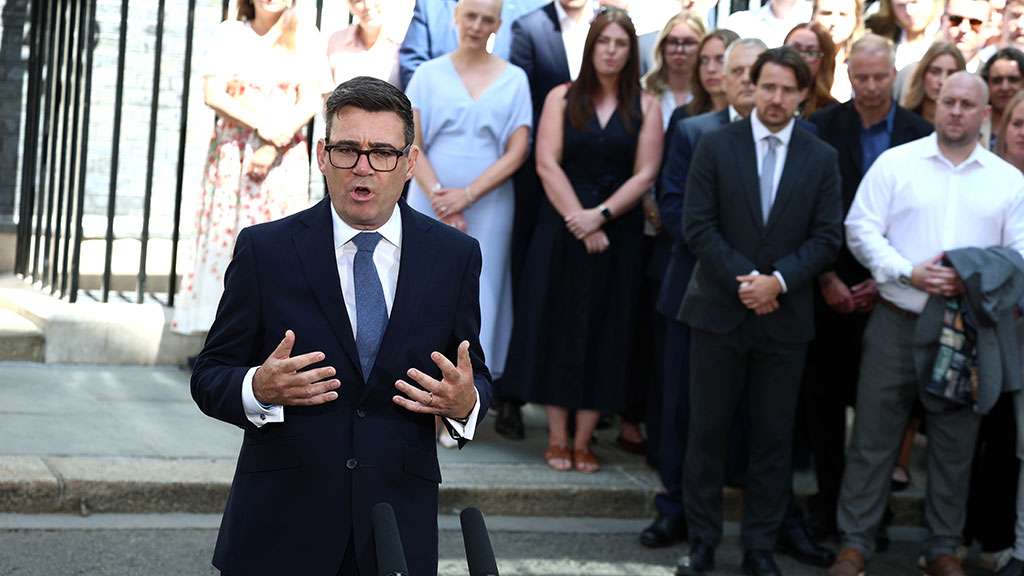
Landlords have heard talk of stamp duty and council tax reform before, but rarely from someone holding the keys to Number 10.
Andy Burnham, who took office as Prime Minister on Monday, has spent 16 years arguing that Britain taxes property at the wrong moment in the wrong way, and The i Paper reports that the Government is now weighing two options for a replacement property tax.
More than 100 MPs behind a land value tax
According to The i Paper, more than 100 Labour MPs support scrapping stamp duty and replacing it with a land value tax (LVT), an annual levy based solely on the value of the land itself, excluding any buildings or improvements on the property.
Burnham has promised to stick to Labour’s 2024 manifesto pledges not to raise income tax, VAT and national insurance. He has, however, suggested there could be “some movement”, with possible increases to business rates on warehouses funding tax cuts for pubs and some high street businesses.
When he launched his campaign to return to Parliament in May, Burnham indicated he wanted to change how property and land is taxed. He has also reportedly backed a proportional property tax, an annual charge set as a percentage of a property’s value.
The instinct is not new. “The LVT, an annual tax on the market rental value of the land, would allow for the abolition of stamp duty, a tax on the aspirations of young people to put down roots and get on in life,” he wrote in the Guardian during his first bid for the Labour leadership in 2010.
Endorsing reform from the sidelines and legislating for it in office are, of course, different exercises.
Why economists want stamp duty gone
Stamp duty is paid by buyers on properties or land worth over £125,000 in England and Northern Ireland, or £300,000 for first time buyers. The Institute for Fiscal Studies has described it as “one of the most economically damaging taxes”, and Kemi Badenoch said last year that a Conservative government would abolish the levy on main homes.
Economists are close to unanimous. “More or less any property tax or local tax is going to be better than stamp duty,” says Stuart Adam of the IFS, whose colleagues have argued that stamp duty penalises landlords and renters alike. “What stamp duty does is discourage people from buying and selling.”
Land, Adam argues, is in fixed supply, visible, identifiable and cannot leave the country, which makes it an efficient base with no “damaging disincentive effects” on behaviour. Removing the transaction charge would also squeeze more out of existing stock. “It would lead to less pressure on the housing market, less need to build more stuff,” he says.
That argument matters for portfolio investors, who have watched reform speculation itself slow the market long before any legislation has been drafted.
The practical case against
Lucian Cook, head of residential research at Savills, is more sceptical, on both practical and political grounds.
“Has Burnham been given the electoral mandate to do it?” he asks. “It is such a big change to the tax system with clear winners and losers; it will be difficult to pull off within the rest of this Parliament.”
Stamp duty, Cook points out, is simple. It is levied at the point of sale and generates “upfront receipts” for the Treasury. A land value tax, by contrast, would be “highly bureaucratic” to implement and open to “significant challenge” from landowners, because separating land value from the buildings standing on it is far from straightforward.
“For any new tax system you bring in, you would want it to be revenue neutral,” he says. “There is little doubt that [stamp duty] suppresses transaction activity, but it’s about balancing that against the alternative.”
Proponents counter that shifting the burden away from buyers would encourage retirees and empty nesters to downsize, freeing family homes. Cook is unconvinced that this sells politically. Property is an “emotive issue”, he says. “Some of them would just find it unaffordable and people would feel forced to sell their home of which they have an emotional attachment. In general you do want to encourage a bit of downsizing in the market, but people want to feel like it’s their choice.”
Council tax, and who pays for Wigan’s libraries
Burnham has been equally scathing about council tax, which he views as “highly regressive”. Introduced in 1993, it sorts English properties into eight bands, A to H, based on what they would have sold for in 1991. Lower value homes in bands A and B pay proportionately higher rates than those at the top.
The Lib Dems have long called for reform, and the IFS says revaluation is “long overdue”. Chancellor Rachel Reeves has already announced a High Value Council Tax Surcharge of at least £2,500 on properties worth more than £2m from 2028, levied on owners rather than occupiers and running alongside council tax.
Burnham reportedly supports a proposal from campaign group Fairer Share for a levy equivalent to 0.48 per cent of a property’s value. Cook warns that such a tax would fall heavily on London and the South East. “If you are living in Wandsworth, you may be thinking ‘why am I paying for libraries in Wigan?'”
Adam counters that redistribution depends on whether central grants to local authorities are adjusted alongside. The IFS position is a combined land value and proportional property tax, replacing both stamp duty and council tax. “There is a case for taxing the land but also a case for taxing the building,” Adam says.
What this means for investors
For landlords, the direction of travel points towards recurring annual charges and away from one off transaction taxes. That reshapes the maths on holding periods, yields and exit timing, particularly for higher value stock in the South East.
Nothing has been legislated. But with a Prime Minister who has argued this case for 16 years, and a rental market already unsettled by renewed talk of rent controls, investors would be unwise to assume the status quo survives this Parliament. The prudent move is to model portfolios against an annual levy now, while market confidence remains fragile and repricing is still possible on the buy side.